Some health conditions are frustrating not because they are rare, but because they are difficult to explain. People living with chronic pain, sensory overload, fatigue, nervous-system dysregulation, and stress-responsive symptoms often describe something similar: Everything looks normal. Yet they do not feel normal. That experience has created enormous interest in approaches outside conventional symptom management.
Among wellness communities, two substances appear repeatedly in discussions:
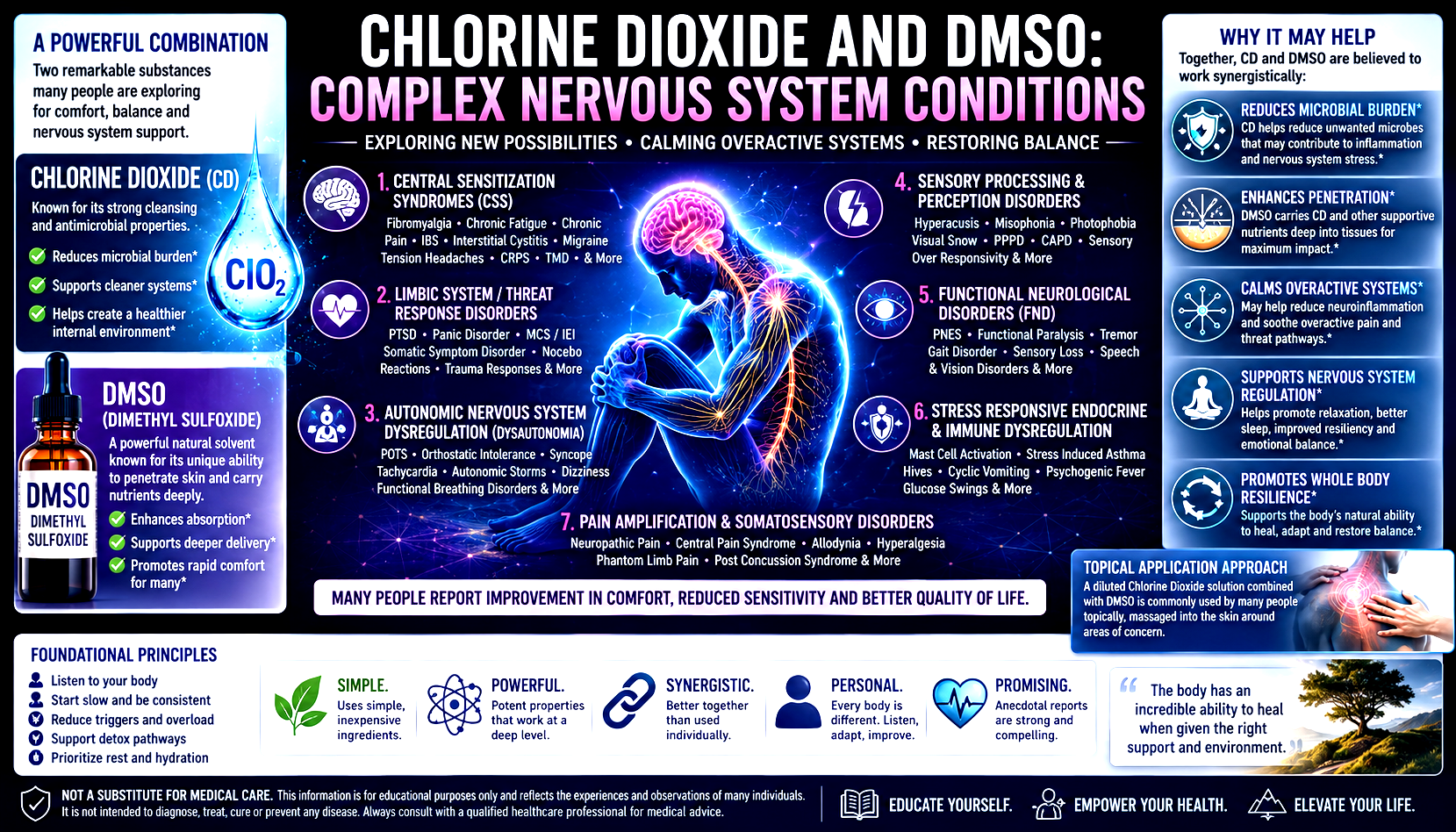
- chlorine dioxide (best known for water purification and sanitation)
- DMSO (dimethyl sulfoxide), known historically for interest in topical penetration and comfort-related discussions
Although these combinations are not established medical treatments for the conditions below, many people continue exploring them as part of broader self-care routines focused on comfort, body awareness, environmental load reduction, and recovery practices.
- Central Sensitization Syndromes
When the Nervous System Becomes Overprotective
Central sensitization is a concept describing situations where the nervous system appears to amplify normal signals.
People often describe:
-
- pain becoming louder
- sensations becoming more intense
- ordinary experiences becoming exhausting
Conditions frequently discussed in this category include:
-
- fibromyalgia
- chronic widespread pain
- chronic migraine
- chronic fatigue syndrome / ME/CFS
- chronic pelvic pain
- IBS
- interstitial cystitis
- tension headaches
- TMD
- functional dyspepsia
Why Supporters Become Interested
Supporters often speculate that routines involving topical self-care may help because they:
-
- encourage relaxation
- create ritualized nervous-system downshifting
- reduce stress responses
- support body awareness
Some describe topical application practices as creating a feeling of “turning down the volume,” though experiences vary widely.
- Limbic System and Threat Response Conditions
When the Alarm System Stays On
Conditions in this group often involve persistent states of vigilance.
Examples include:
-
- PTSD
- panic disorder
- multiple chemical sensitivity discussions
- illness anxiety
- trauma-linked physiological responses
- odor-triggered reactions
People frequently describe:
-
- feeling unsafe
- exaggerated responses
- heightened awareness
Why People Explore Alternative Routines
Supporters often believe comfort routines may help interrupt cycles of:
-
- anticipation
- guarding
- hyperfocus on symptoms
Not because a topical substance changes trauma—
but because ritual and calming practices sometimes influence perception.
- Autonomic Nervous System Dysregulation
When Automatic Systems Feel Less Automatic
This category includes discussions around:
-
- POTS
- orthostatic intolerance
- vasovagal episodes
- autonomic storms
- chronic dizziness
- functional breathing concerns
People often describe:
-
- instability
- unpredictable reactions
- exhaustion
Why Supporters Discuss Topical Practices
People commonly describe experimenting with:
-
- warmth
- touch
- hydration
- movement
- body regulation routines
Supporters sometimes include topical wellness approaches within that broader framework.
- Sensory Processing and Perception Conditions
When Input Arrives Too Loud
Examples include:
-
- hyperacusis
- misophonia
- photophobia
- visual snow discussions
- PPPD
- sensory over-responsivity
People often say:
“Nothing changed around me—yet everything feels louder.”
Supporters frequently emphasize creating environments that reduce total nervous-system load.
- Functional Neurological Disorders
When Function Changes Without Structural Injury
Conditions often discussed:
-
- functional tremor
- PNES
- functional paralysis
- gait disturbances
- sensory changes
- speech changes
Supporters commonly focus less on pathology and more on:
-
- retraining
- regulation
- reducing overwhelm
- consistency
- Stress-Responsive Endocrine and Immune Conditions
When Stress Appears Physical
Examples:
-
- stress-induced asthma discussions
- hives
- psychogenic fever
- cyclic vomiting discussions
- adrenaline-driven fluctuations
People often become interested in approaches that emphasize:
-
- reducing total body stress
- comfort
- supportive routines
- Pain Amplification Conditions
When the Experience of Pain Outpaces Tissue Findings
Examples:
-
- allodynia
- hyperalgesia
- central pain discussions
- phantom limb pain
- post-concussion symptom discussions
Supporters often describe using touch-based or topical routines because they create:
-
- grounding
- attention shifts
- sensory interruption
- body awareness
Why DMSO Continues Appearing in These Discussions
DMSO has attracted interest for decades because supporters describe it as:
- fast acting
- associated with warming sensations
- associated with topical routines
- supportive of body awareness
Whether these experiences reflect physiology, expectation, ritual, or a combination remains debated.
Why Chlorine Dioxide Appears Alongside It
Interestingly, chlorine dioxide discussions in these circles are rarely about a single mechanism.
Supporters often talk about ideas such as:
- reducing environmental burden
- simplifying routines
- supporting comfort
- reducing perceived load

Complex conditions often create complex journeys. People continue exploring unconventional ideas not because they reject medicine, but because they are looking for relief, understanding, and a greater sense of participation in their own recovery.
That curiosity is understandable. But curiosity works best when paired with humility, patience, and critical thinking.
Disclaimer
This article discusses observations and wellness discussions surrounding chlorine dioxide and DMSO and should not be interpreted as medical advice or as evidence that these substances treat the listed conditions. The conditions described are real medical conditions that deserve proper evaluation and individualized care.
Leave a Reply