Modern health culture often focuses on stopping symptoms. If inflammation rises, we suppress it. If a fever appears, we lower it. If fatigue surfaces, we stimulate energy. These responses can be useful in acute situations. However, they sometimes overlook an important biological principle: many physiological processes are designed to complete cycles, not simply disappear. The body does not always aim to silence signals immediately. Instead, it activates a sequence of events that begins with detection and ends with resolution. When these sequences finish properly, equilibrium returns. When they are interrupted prematurely, the cycle may remain partially open.

The Architecture of Biological Cycles
Most regulatory processes in the body follow a predictable arc:
- Detection – the body identifies a disturbance.
- Activation – immune or metabolic responses begin.
- Amplification – signals increase to address the issue.
- Resolution – inflammatory and oxidative signals decline.
- Restoration – tissues repair and baseline returns.
This pattern occurs across many systems:
-
- immune responses to microbial exposure
- inflammatory signaling after injury
- oxidative chemistry during stress
- detoxification and cellular waste clearance
- metabolic adaptation following exertion
When each stage unfolds in sequence, the system resets.
When Cycles Remain Open
Problems arise when cycles stall before resolution.
A disturbance may decrease enough to reduce obvious symptoms, but not enough for the body to fully close the loop.
In these situations, several residues may remain:
-
- fragments of microbial activity
- low-grade inflammatory signaling
- oxidative byproducts
- partially cleared cellular waste
- subtle redox imbalance
These remnants may keep regulatory pathways partially engaged.
The body continues operating normally, but with a slightly elevated baseline of vigilance. Over time, multiple unfinished cycles can overlap. The result is often experienced as chronic low-level strain rather than acute illness.
The Cost of Incomplete Resolution
When regulatory loops remain open, physiological resources remain allocated toward defense.
Inflammatory signaling may stay modestly elevated.
Mitochondrial output may shift toward oxidative chemistry.
Immune cells may continue monitoring tissues more intensely.
Repair pathways may receive fewer resources.
This does not necessarily create dramatic symptoms.
Instead, it narrows biological margin.
Recovery slows.
Energy fluctuates.
Tolerance to new stressors decreases.
In this way, incomplete resolution can gradually shape long-term resilience.
Completion vs Suppression
Completion and suppression are not the same process. Suppression attempts to quiet signals quickly. Completion allows the cycle to proceed until its natural resolution phase occurs.
Completion often depends on clearing the original disturbance as well as the chemical debris generated during the response. If irritants remain present, regulatory systems may hesitate to stand down.
From the body’s perspective, vigilance remains justified.
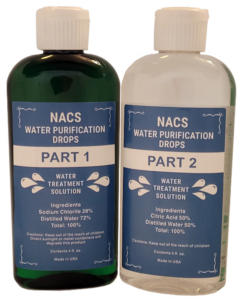
Enter Chlorine Dioxide
Within terrain-focused discussions, chlorine dioxide is not described as suppressing inflammatory signaling directly.
Instead, its proposed relevance relates to addressing sources that may keep biological cycles open.
If microbial persistence declines, immune detection signals may resolve more quickly.
If biofilm structures weaken, hidden irritants may become less stable.
If oxidative residue decreases, redox signaling may normalize.
If inflammatory chemistry clears more efficiently, resolution phases may complete.
By reducing the underlying triggers that prolong activation, regulatory loops may have a greater chance to finish naturally.
The objective is not to silence the response prematurely.
It is to allow the response to conclude.
Completion and Longevity
Biological longevity depends heavily on how efficiently cycles close. When stress responses complete fully, the body returns to baseline with minimal residual strain. When they remain partially active, small signals accumulate.
Over decades, these unresolved fragments can contribute to chronic inflammation, oxidative burden, and metabolic inefficiency.
Completion protects resilience. It ensures that the body does not carry yesterday’s response into tomorrow’s challenge.
Informational Orientation
Strategies aimed at supporting completion of biological cycles often emphasize:
-
- reducing persistent microbial burden
- weakening biofilm environments that shelter irritants
- stabilizing redox balance
- improving oxygen diffusion and metabolic efficiency
- supporting cellular waste clearance
As background interference declines, regulatory pathways may finish their work more efficiently.

The body is not designed to remain in perpetual response. Every activation sequence has a closing phase. When cycles are allowed to complete, equilibrium returns quietly and efficiently. Health, in many ways, is the art of finishing what biology begins.
Disclaimer:
This article is for informational and research purposes only. Chlorine dioxide is not approved for internal therapeutic use by regulatory agencies. Immune and metabolic systems are complex and require professional guidance before making health-related decisions.
Leave a Reply