For many people, fatigue is more than simply feeling tired. It can affect concentration, memory, sleep quality, work performance, motivation, and overall quality of life. When symptoms persist despite normal medical testing, individuals often begin exploring a wide range of wellness approaches in hopes of improving how they feel. Among those approaches, chlorine dioxide has attracted attention in some alternative health communities. While chlorine dioxide has well-established applications in water purification and sanitation, some individuals have also reported subjective improvements in energy, mental clarity, and overall well-being after using it. At present, however, there are few high-quality scientific studies evaluating chlorine dioxide for these health-related purposes, and many of the reported benefits remain anecdotal.
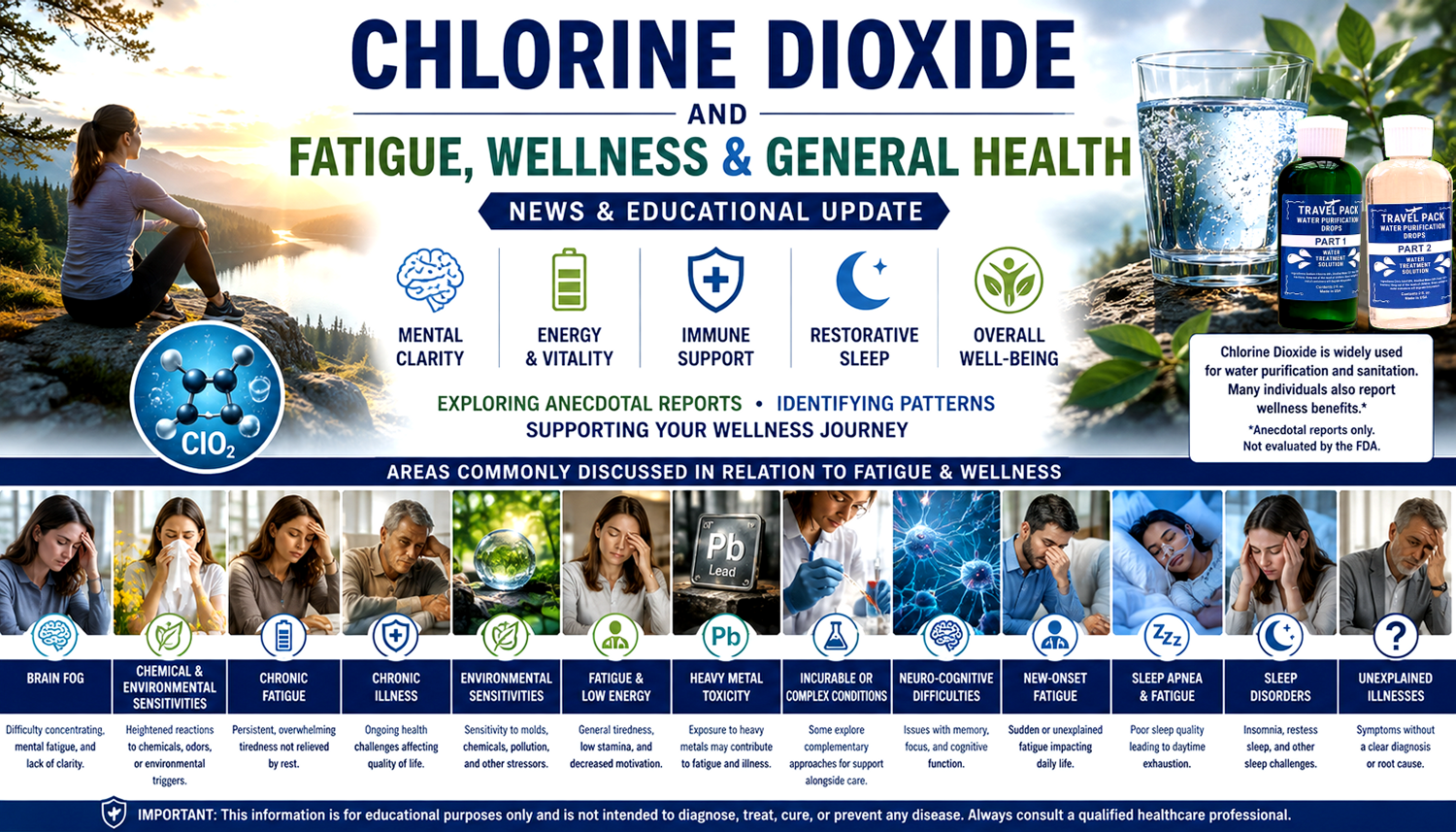
One possible reason these reports continue to appear is the belief among some users that reducing microbial burden or improving environmental cleanliness may indirectly support the body’s natural recovery processes. These ideas remain hypotheses and have not been established by robust clinical evidence.
The following chart summarizes commonly reported areas of interest.
Fatigue, Wellness & General Health Chart
| Condition or Concern | Brief Description | Why Some Users Discuss Chlorine Dioxide* |
| Brain Fog | Difficulty concentrating, reduced mental clarity, forgetfulness. | Some individuals report improved mental clarity after addressing factors they believe contribute to their symptoms. |
| Chemical Sensitivity | Heightened reactions to environmental chemicals or odors. | Some users believe reducing overall toxic or microbial burden may support well-being. |
| Chronic Fatigue | Persistent exhaustion not relieved by rest. | Reports describe increased energy in some individuals. |
| Chronic Illness | Long-term conditions that may affect multiple body systems. | Users incorporate chlorine dioxide into broader wellness routines. |
| Environmental Sensitivities | Difficulty tolerating molds, pollutants, or environmental irritants. | Some individuals report subjective improvements after focusing on environmental health and water quality. |
| Fatigue | Ongoing physical or mental tiredness. | Reports often describe feeling more energetic, though fatigue has many possible medical causes that require evaluation. |
| Heavy Metal Toxicity | Exposure to elevated levels of certain metals. | Some wellness discussions include chlorine dioxide as part of heavy metal detoxification approaches. |
| Incurable Disease | Conditions without known curative therapies. | Individuals sometimes explore complementary approaches alongside conventional medical care. |
| Neuro-Cognitive Difficulties (Brain Fog) | Problems with memory, attention, or processing speed. | Anecdotal reports mention improved cognitive function. |
| New-Onset Fatigue | Fatigue developing without an obvious cause. | Because fatigue has many possible causes, appropriate medical evaluation is important before considering complementary approaches. |
| Sleep Apnea | Repeated interruptions of breathing during sleep leading to poor-quality rest. | Many individuals have shared personal experiences of improvement. |
| Sleep Apnea & Fatigue | Daytime exhaustion associated with disrupted sleep. | Some anecdotal reports describe better daytime energy following perceived improvements in sleep quality. |
| Sleep Disorders | Conditions that interfere with healthy sleep. | Users occasionally report sleeping better as overall wellness improves. |
| Stress & Fatigue (Systemic Toxic Load) | Fatigue associated with prolonged physical or emotional stress. | Many people believe reducing environmental stressors supports recovery. |
| Unexplained Illnesses | Persistent symptoms without a clear diagnosis. | Individuals sometimes seek complementary approaches when conventional evaluations have not identified a cause. |
*These descriptions summarize anecdotal discussions and hypotheses. They should not be interpreted as evidence that chlorine dioxide is an effective treatment for these conditions.
Why Might Some People Report Feeling Better?
Supporters of chlorine dioxide often suggest several possible explanations for why some individuals report improvements in general wellness. These ideas include:
- Attention to cleaner drinking water and improved hydration.
- Greater focus on nutrition, sleep, and healthy habits while following a wellness program.
- Reduction of environmental microbial contamination in certain settings.
- Individual differences in health status and response.
- The natural fluctuation of symptoms over time.
These possibilities remain areas for further research and should not be interpreted as proven mechanisms for treating disease.
Established Uses vs. Wellness Discussions
It is important to distinguish between chlorine dioxide’s established uses and broader wellness claims.
Established Uses
Chlorine dioxide is widely recognized for:
- Drinking water treatment
- Municipal water disinfection
- Emergency water purification
- Food sanitation
- Industrial sanitation
- Biofilm control in certain water systems
Wellness Discussions
Some individuals also discuss chlorine dioxide in relation to:
- Energy
- Mental clarity
- Recovery
- General wellness
- Environmental health
These reported experiences have not been validated as medical treatments through high-quality clinical research.

Fatigue and related symptoms can arise from many different causes, including sleep disorders, infections, nutritional deficiencies, endocrine conditions, medications, mental health concerns, and other medical issues. Anyone experiencing persistent or unexplained fatigue should seek an appropriate medical evaluation.
Chlorine dioxide remains an established tool for water purification and sanitation. While anecdotal reports have prompted interest in possible wellness applications, more rigorous scientific research is needed before conclusions can be drawn regarding its effectiveness for fatigue, brain fog, chronic illness, or other health conditions.
Readers interested in this topic are encouraged to distinguish carefully between established uses, personal testimonials, and evidence from well-designed clinical studies.
Leave a Reply